Cuts paraprofessional back-injury workers-comp claims
Districts self-insure or carry rated risk pools — every para injury is a real budget line.
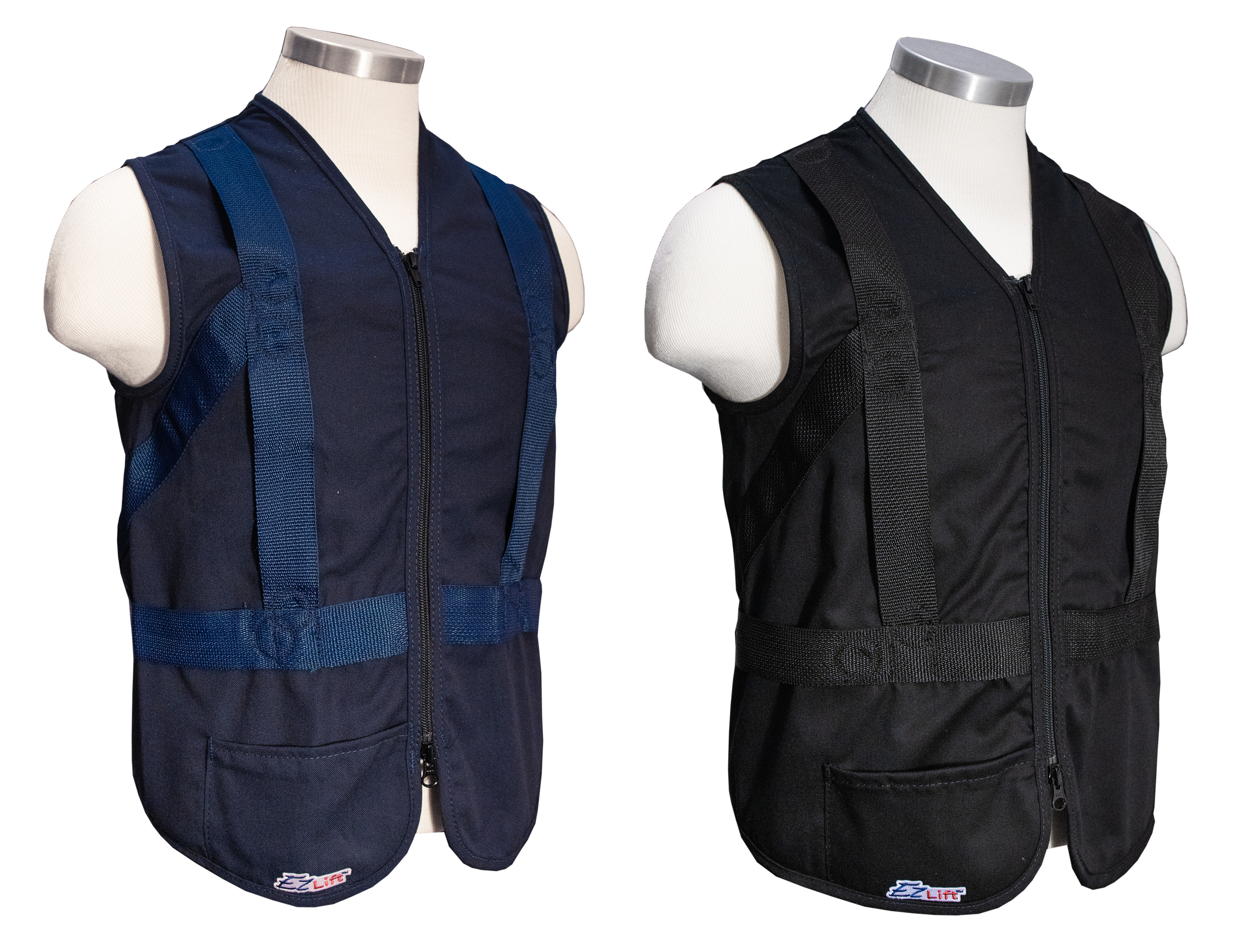
Manual wheelchair-to-seat transfers are the #1 injury mechanism for paras. One aide, one grip point (the gait belt), and a moving child is how backs go out. The vest gives 11 grip points and torso-distributed load — the difference between "controlled lower" and "catch-and-strain."
One aide handles the transfer
No pulling a para off another 1:1 student to help.
The vest is engineered for single-caregiver transfers up to 300 lb. That means a self-contained classroom keeps its student-to-adult ratio intact during transfers — no cascading disruption every time a wheelchair-to-toilet transfer is needed.
Safe for students with G-tubes, ports, and central lines
The gait belt cinches across exactly where these medical devices sit.
The vest carries load across the upper torso, not the waist. No abdominal pressure. That makes it the correct tool for students with feeding tubes, TPN ports, tracheostomy sites, or recent surgical sites — a common profile in SPED classrooms for students with complex medical needs.
Fits over school clothes, uniforms, and light outerwear
No pre-transfer clothing removal or wrestling with layers.
The vest is sized to go on quickly over a student's regular clothing. That respects student dignity, saves classroom time, and works in cold buses and outdoor recess as easily as it works indoors.
Buy-American compliant procurement
Made in St. Petersburg, Florida.
Meets Buy-American preferences for K-12 district procurement, federal Title funding, and special education cooperative purchasing. Can be procured through standard district PO workflows, GPO contracts, and E&I / Sourcewell-style cooperative vehicles.
Durable for multi-student, multi-year use
A classroom-level tool, not a per-student consumable.
The vest is wipeable, reinforced at every stitch, and lasts multiple school years across multiple students. Districts often buy per-classroom (not per-student), amortizing cost across the SPED population.