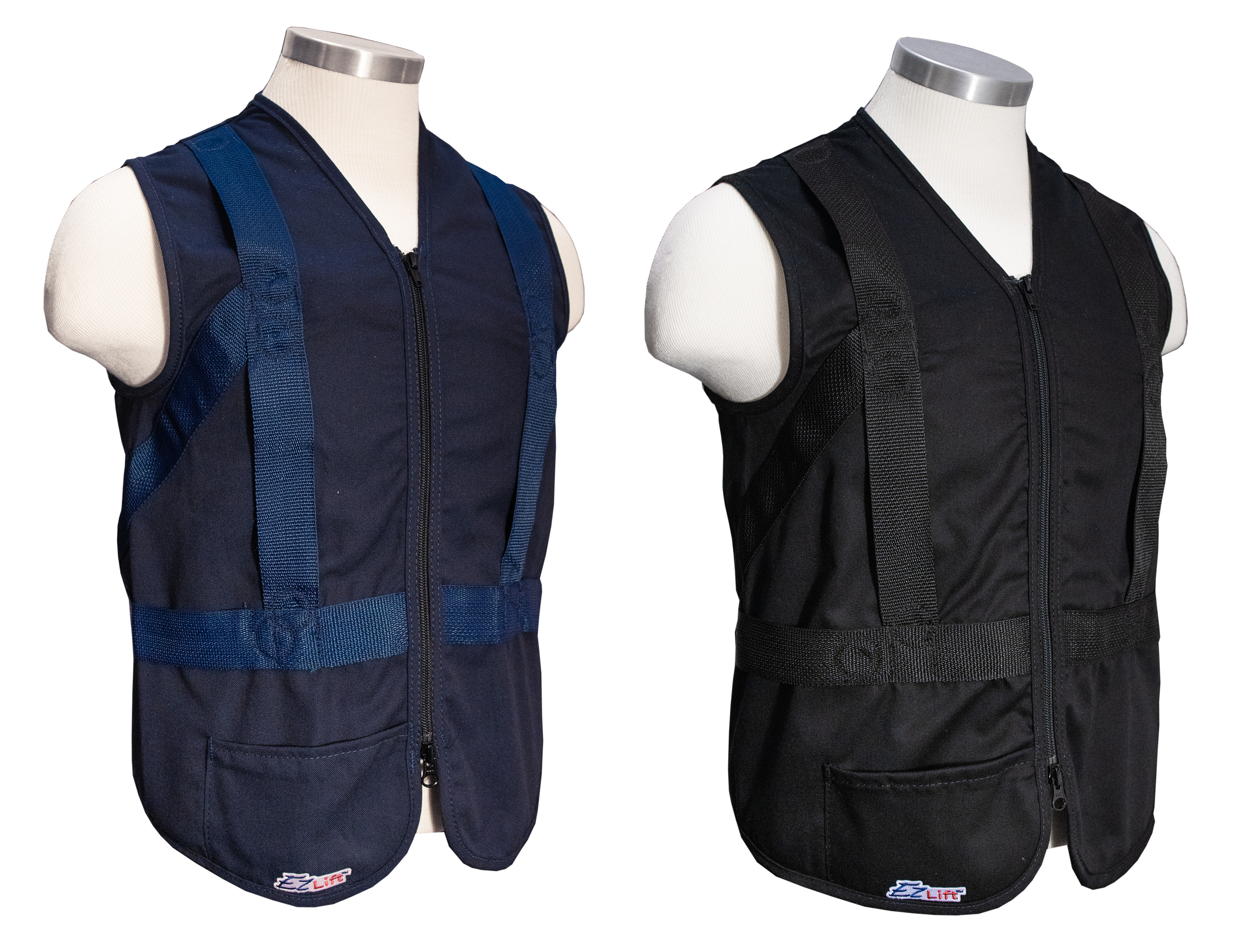
Reads as clinical equipment, not restraint
Framing matters for audits, families, and payers.
RN-designed, patented, transfer-focused. The vest is a medical device — documentable as a transfer aid in behavior support plans, not as physical management or restraint equipment.
11 grip points give safe leverage during unpredictable movement
The physical reality of the population.
Multiple grip points let staff maintain safe leverage even when a client's motor movement shifts unexpectedly during a transition. Controlled lower — not catch-and-strain.
Fits BCBA and RBT workflow
Doesn't disrupt session or data collection.
The vest can be applied at the start of a session and removed at the end. It doesn't interrupt the ABA session structure or the client's expected transition sequence.
Compatible with clients with concurrent motor disabilities
The population under-served by pure ABA equipment.
For clients with autism + cerebral palsy, autism + hypotonia, or other concurrent motor diagnoses, the vest is the correct tool for the motor side of the care plan.
Reduces staff injury during transitions
A common attrition risk in ABA.
RBTs often leave the field after a transfer or transition injury. The vest changes the biomechanics of the highest-risk moves and protects the workforce.
Documentable in support plans & payer paperwork
Medical device framing lands in the file.
Reference the vest by name in your behavior support plan, physical management protocol, and payer documentation. RN-designed clinical device framing does the work.