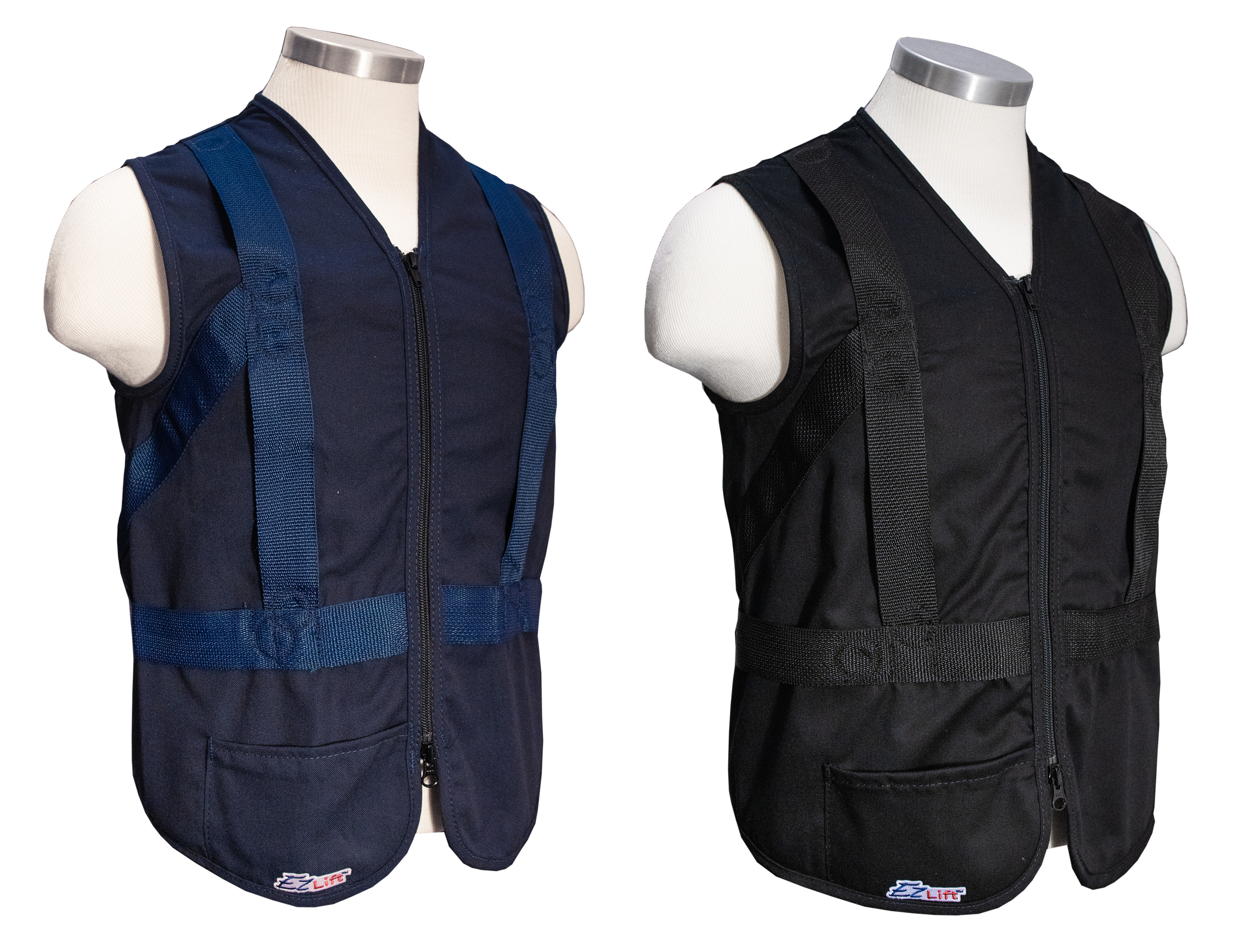
Single-DSP transfers keep staffing ratios legal
State licensure ties DSP-to-participant ratios to the floor at all times.
Every time a two-person manual transfer pulls a DSP off their assignment, the ratio breaks for the other participants. The vest keeps every DSP with their assigned group — the transfer happens without cascading.
Cuts the workers-comp claims that eat your rate
Medicaid rates were set years ago. Every WC claim comes straight out of margin.
DSP back injury is the #1 strain-claim mechanism in adult day services. The vest's 11 grip points and torso-distributed load change the biomechanics — from catch-and-strain to controlled lower.
300 lb capacity covers your full participant population
Most transfer aids top out around 250 lb — the vest doesn't.
Larger participants are often the hardest to transfer safely with a gait belt. The 300 lb capacity means the same tool works for everyone on your caseload, not just the average.
11 grip points work during unpredictable movement
Participant behavior can shift mid-transfer.
Multiple secure grip points give a DSP the leverage to control a transfer even when a participant moves unexpectedly. It's a physics change, not a training change.
Reads as clothing, not a restraint
Dignity matters — for participants, families, and licensing surveys.
The vest wraps the upper torso like a garment. Participants generally accept it in a way they don't accept a belt cinched at the waist, and families read it as PPE for the staff rather than restriction for the person.
Compatible with wheelchairs, walkers, and standers
One tool for the whole equipment ecosystem.
The vest works with the mobility equipment participants already have — no equipment substitution required. That matters when a participant's chair or walker is a personal medical device.