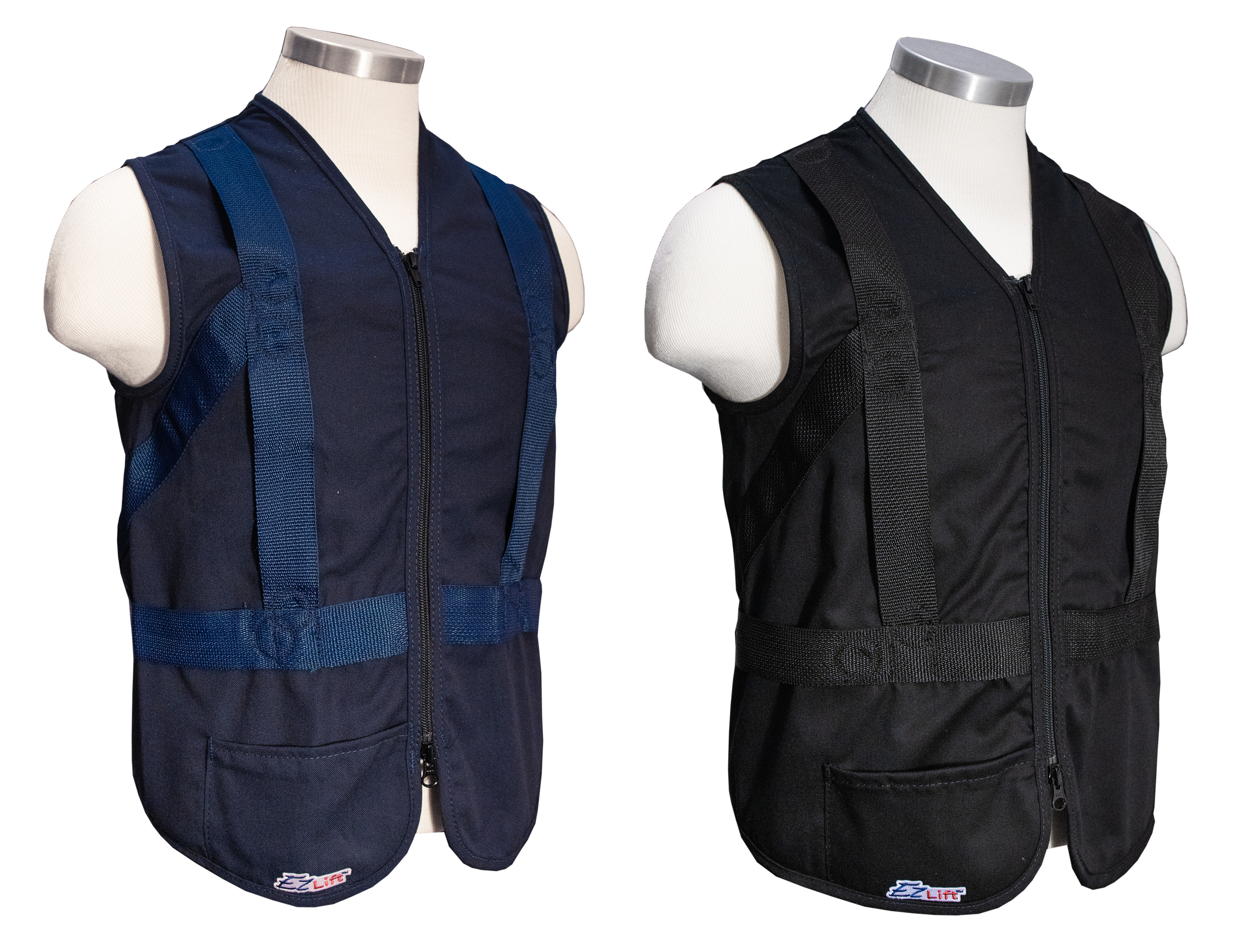
Solo-overnight-safe by design
The moment when a two-person policy is a fiction.
Awake overnight and asleep overnight shifts are the reality of residential I/DD. When a resident needs the bathroom at 2 AM, there is no second DSP. The vest is engineered for that reality — 11 grip points, controlled lower, 300 lb capacity.
Replaces both the gait belt and the slide sheet
Two tools consolidated into one.
The vest handles pivot and standing transfers (gait-belt work) plus many bed-reposition scenarios (slide-sheet work) with a single tool. Fewer tools, more consistent training.
Wipeable — safe for shower-chair sequences
Wet, slippery bathrooms are where transfer injuries land.
The vest is constructed of wipeable material and can be used through the shower-chair transfer sequence. Standard cleaning between transfers keeps it hygienic across residents.
Won't slip on a drowsy resident
Patented torso-distribution design keeps the vest on when a body goes slack.
A gait belt slips when a drowsy or partially-cooperative resident's weight shifts. The vest wraps the upper torso — the grip stays where it started.
Floor-to-standing recovery after a fall
The transfer you don't want to do — but you have to.
The 11 reinforced grip points give a DSP multiple leverage points for controlled floor-to-standing. If the resident can bear weight, one DSP recovers the situation. If not, the vest supports a proper two-person mechanic.
Reduces workers-comp exposure on the highest-risk shift
Overnight WC claims are the ones your carrier calls about.
Every strain claim on an overnight shift becomes a talking point in your next renewal. The vest changes the biomechanics of the highest-risk transfers — the ones most likely to become claims.